अवधारणा Mercury (Quicksilver) is toxic. However, in the Indian alchemical tradition (Rasa Shastra), it was refined using 18 specific methods (Samskaras) to ensure its safety for internal use.
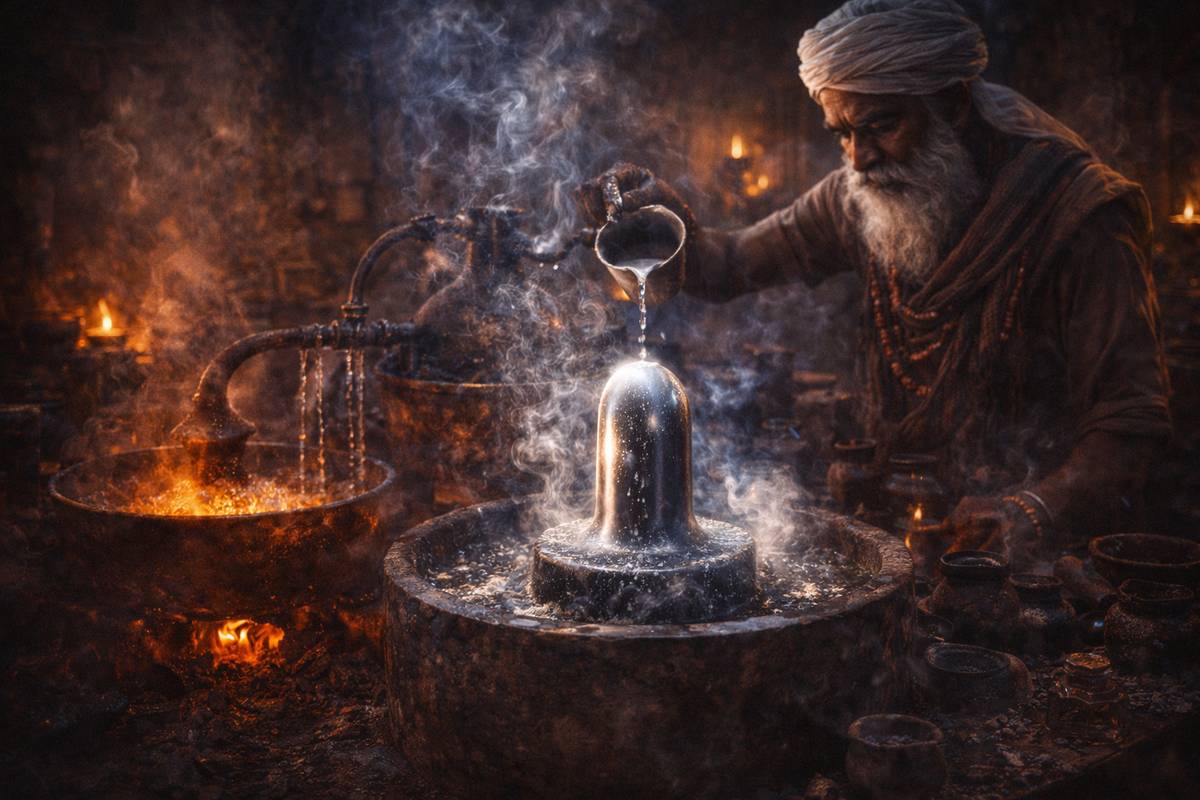
कहानी In the West, mercury was a deadly poison to be feared; in India, it was a “living metal” to be mastered. While European alchemists were obsessed with turning lead into gold, Indian masters like Nagarjuna were focused on the Parad Samskara—an 18-stage purification process to make mercury safe for medicine. They learned to “bind” the liquid metal, turning it into solid forms like the Parad Lingam. This wasn’t just alchemy; it was the birth of Iatrochemistry—the revolutionary idea of using mineral-based chemicals to heal the body rather than just herbs.
समयरेखा
| मील का पत्थर | विवरण |
| पश्चिमी संदर्भ. |
1500s CE (Paracelsus uses mercury for syphilis) |
| भारतीय स्रोत |
Prior to 200 CE (Rasaratnakara by Nagarjuna) |
| काल अंतराल |
Over 1,300 Years |
मूल पाठ
संस्कृत श्लोक: अष्टादशसंस्कारैर्विमुक्तदोषो भवेत् सूतः । सकलामयघ्नवीर्यः सिद्ध्यति रसबन्धनेन लोहसिद्धिः ॥
लिप्यंतरण: Aṣṭādaśasaṃskārairvimuktadoṣo bhavet sūtaḥ | Sakalāmayaghnavīryaḥ siddhyati rasabandhanena lohasiddhiḥ || Rasahridaya Tantra (Detailed steps on purifying mercury).
अर्थ: “By the eighteen processes (Samskaras), Mercury (Suta) becomes free from defects. It gains the potency to cure all diseases, and by binding (Bandhana), it achieves success in transmuting metals/body.”
संबंधित नवाचार The Rasaratna Samuccaya (about 1300 CE) described the alchemical process of solidification (Baddha), which converts liquid mercury into solid forms. It also used the metaphor of Hara and Gauri’s sacred union to illustrate the chemical reaction between Mercury and Sulphur.
मजेदार तथ्य Some ancient Shivalingas were made of solidified mercury (Parad Lingam), a metallurgical oddity that remains solid at normal temperature.
आधुनिक विरासत This marked the beginning of Iatrochemistry, the use of chemicals rather than herbs for therapy.