अवधारणा
A water clock, for example, calculates time based on the amount of water that flows into or out of the container.
कहानी
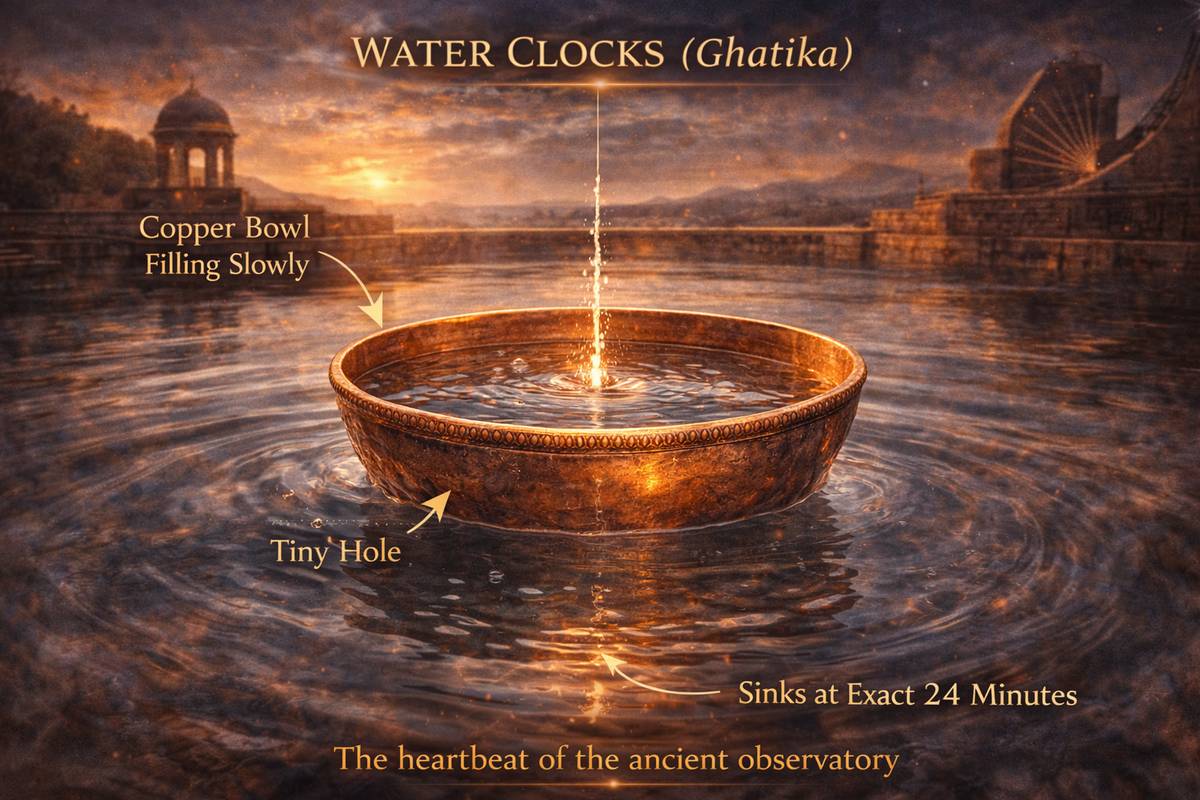
In the quiet of an ancient Indian observatory, time wasn’t measured by ticking gears, but by the steady, rhythmic sinking of a copper bowl. The Surya Siddhanta provided the exact blueprint for the Ghatika Yantra: a specifically weighted vessel with a tiny, precise hole in its base. As it floated in a larger pool, it would sink exactly once every 24 minutes—one Ghatika. While the West was still centuries away from mechanical precision, Indian astronomers used these “water-computers” to track the stars and ensure that sacred rituals were perfectly synchronized with the heartbeat of the cosmos.
समयरेखा
| मील का पत्थर | विवरण |
| पश्चिमी संदर्भ. |
1400 BCE (Egyptians – Clepsydra) |
| भारतीय स्रोत |
Prior to 10,000 BCE (Atharva Veda / Surya Siddhanta) |
| काल अंतराल |
Over 9,000 Years |
मूल पाठ
संस्कृत श्लोक: ताम्रपात्रं दशपलं वृत्तं षोडशाङ्गुलम् । चतुर्यवप्रमाणा च्छिद्रं तस्याधः कारयेत् ॥
लिप्यंतरण: Tāmrapātraṃ daśapalaṃ vṛttaṃ ṣoḍaśāṅgulam | Caturyavapramāṇā cchidraṃ tasyādhaḥ kārayet || मज्जत्यम्भसि यत् षष्ट्या अहोरात्रेण स्फुटम् । Majjatyambhasi yat ṣaṣṭyā ahorātreṇa sphuṭam – It sinks clearly 60 times in a day/night) . Surya Siddhanta (13.23) (Specifications for the copper vessel).
अर्थ: “A copper vessel weighing ten palas… make a hole of four barley-corns width at the bottom… so that it sinks in water sixty times in a day and night.”
संबंधित नवाचार
Stick dials (Shanku) used the shadow of a vertical stick to determine the precise time of day based on solar geometry (Surya Siddhanta). Sand clocks, which used sand instead of water, were popular in medieval India because they were easier to move and kept at a consistent temperature.
मजेदार तथ्य
Did you know that ‘Ghatika’ is still used in Indian astrology to measure time? It was precise enough to keep track of how the stars move .
आधुनिक विरासत
GPS and internet synchronisation (NTP) rely heavily on precise time.