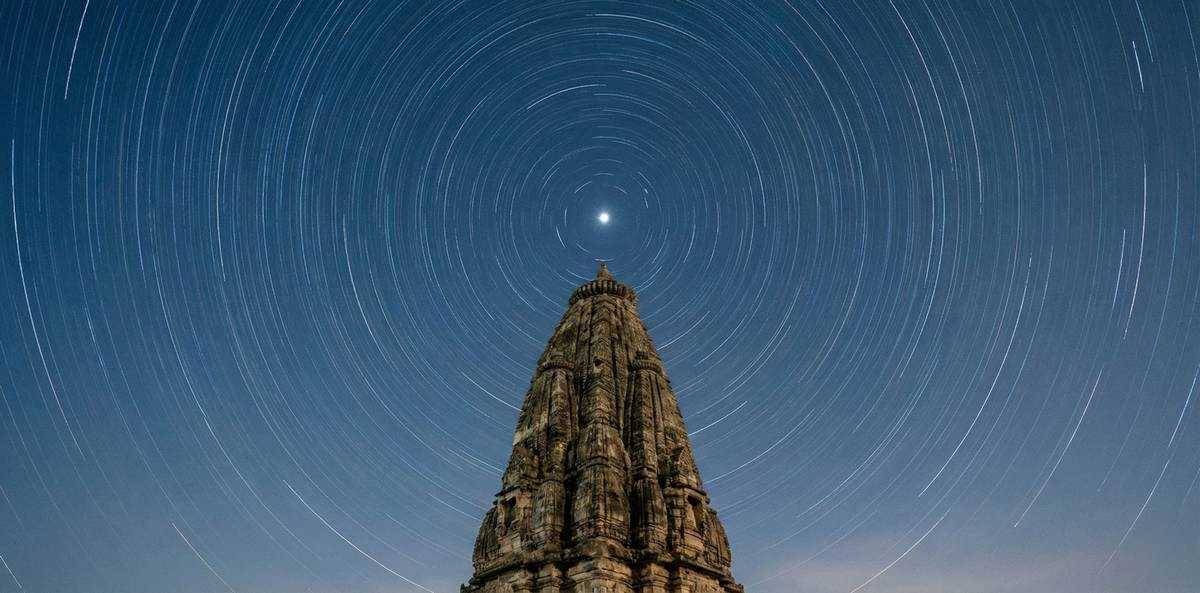
अवधारणा The Pole Star is a stationary point in the night sky, while all other stars appear to move around it. It is extremely useful for navigation because it continually points north.
कहानी In a world of constant motion, the ancient navigators of India sought the “Immovable One”. While Western sailors often hugged the coastlines out of fear of getting lost, Vedic seekers looked to Dhruva—the Pole Star. The story of the young boy Dhruva, who stood on one foot in eternal meditation, was a brilliant metaphor for the one point in the sky that remains stationary while the rest of the universe dances around it. By locking their temples and their ships to this celestial axis, they turned the sky into a permanent map, centuries before the invention of the magnetic compass.
समयरेखा
| मील का पत्थर | विवरण |
| पश्चिमी संदर्भ. |
Middle Ages (Use of Polaris for navigation) |
| भारतीय स्रोत |
Prior to 10,000 BCE (Vedas/ Grihya Sutras) |
| काल अंतराल |
Over 11,000 Years |
मूल पाठ
Sanskrit Reference: ऋग्वेद (10.173.4) ‘Dhruva dyaur dhruva…’ (The heavens are stable, the Earth is stable…).
संबंधित नवाचार The Surya Siddhanta (c. 10,000 BCE) determined the celestial axis used for temple alignment and demonstrated through precession calculations that the Pole Star (Dhruva) is not actually stable but varies over millennia.
मजेदार तथ्य Did you know? The narrative of the young boy Dhruva meditating on one foot for years is a metaphor for the star remaining stationary as the universe revolves around it.
आधुनिक विरासत GPS emerged after celestial navigation, marking the beginning of modern science.