Astronomy in Ancient India
Mapping the cosmos through observation, mathematics, and philosophical insight—revealing one of the world’s earliest scientific traditions.
Astronomy in ancient India was more than just studying stars; it was a fundamental science that helped people keep track of time, create calendars, execute rituals, and comprehend the world. Ancient scholars employed rigorous observation and arithmetic to create systems for properly tracking planet movements, measuring time, and charting the sky.
This tradition is unique in that it mixes philosophy, arithmetic, and observation. People not only observed the cosmos, but also perceived it as a structured, interconnected system with distinct patterns of motion, time, and space. This article examines that system through key themes, providing a structured introduction to one of the world’s oldest scientific traditions.
Nothing Found
COSMIC MODELS
Ancient Indian astronomy tried to answer the most basic concerns regarding the nature of existence, like “What holds the universe together?” How do stars and planets move? What is the size of space and time?
These questions resulted in models that place the Sun at the center and use forces like attraction to control motion. Ideas about huge cosmic time cycles and how people perceive time differently show that people are trying to understand the cosmos not just physically, but also in terms of ideas. These concepts constitute the philosophical and scientific underpinnings upon which more intricate astronomical frameworks were developed.
Nothing Found
PLANETARY MOTION
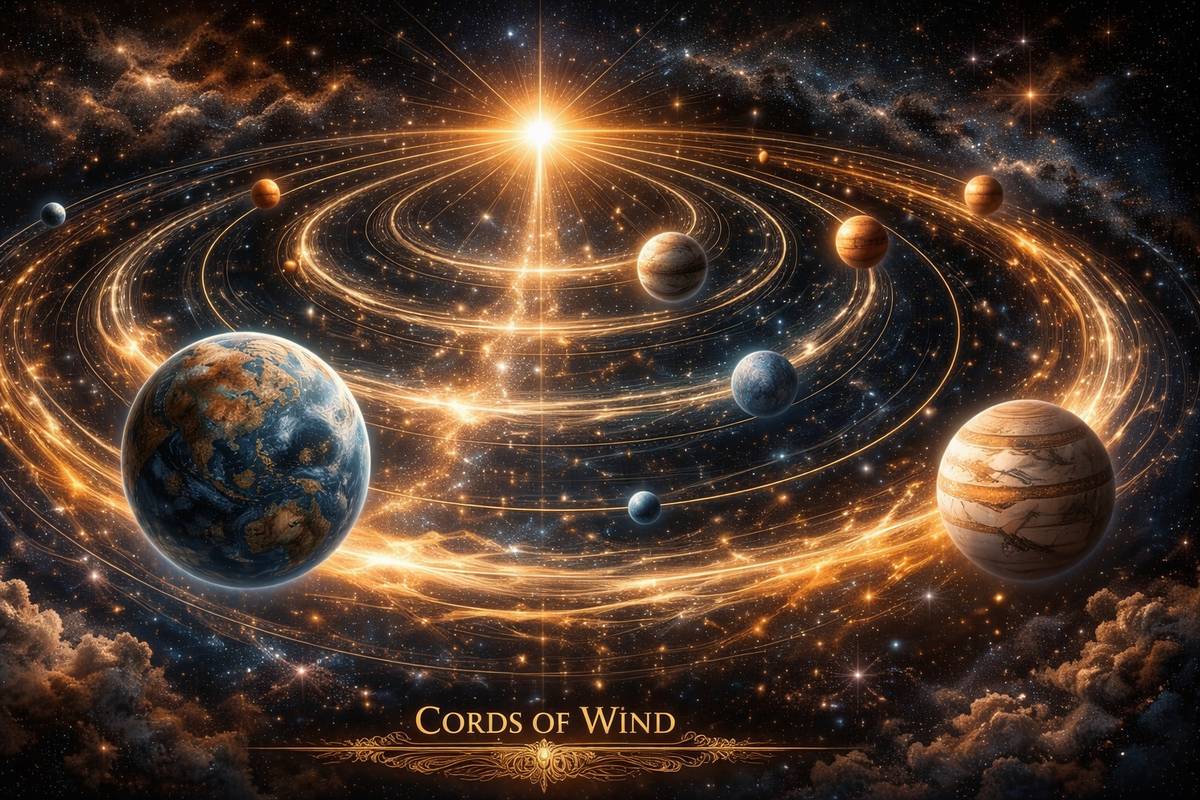
Indian astronomers studied the exact mechanics of how planets move, not just general theories of the universe. They saw patterns in how planets travel, speed up, and sometimes seem to turn around in the sky.
They created mathematical models that could anticipate where planets would be and how they would act in order to explain these events. This change from observing to calculating is a key phase in the growth of astronomy as a science that can make predictions by turning patterns in nature into organised models.
Nothing Found
OBSERVATIONAL ASTRONOMY
A lot of this information came from looking at the night sky directly. People in ancient times watched stars, comets, changes in the seasons, and the moon’s cycles for lengthy periods of time without telescopes or other modern tools.
They were able to find accurate markers for time and direction because they were always looking at the sky. The outcome was a very empirical tradition in which knowledge was built up over time by diligent observation and passed down from generation to generation.
Nothing Found
TIME & CALENDARS
One of the most practical outcomes of astronomical study was the development of precise systems for measuring time. By observing the movements of the Sun, Moon, and stars, Indian scholars created calendars that aligned closely with natural cycles.
These systems were essential not only for scientific purposes but also for agriculture, navigation, and cultural practices. Accuracy in timekeeping ensured continuity, making astronomy a central pillar of daily life as well as intellectual inquiry.
Nothing Found
MATHEMATICAL ASTRONOMY
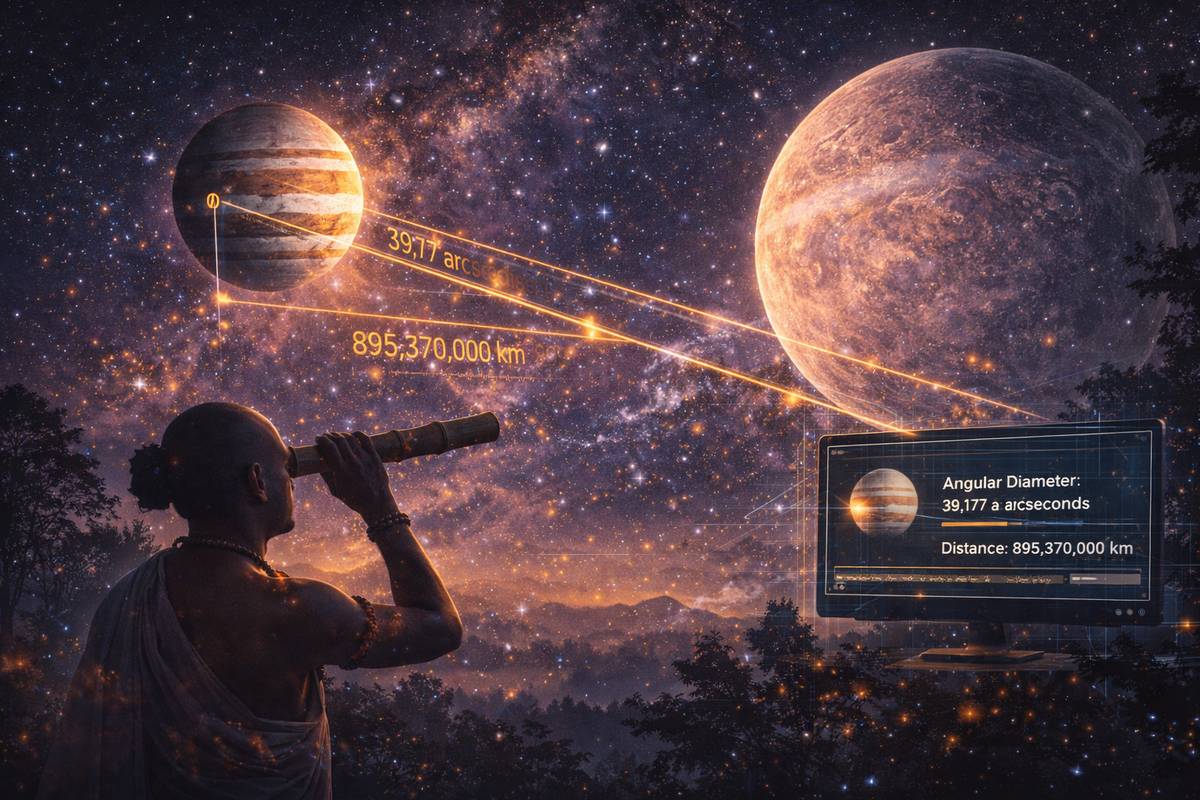
At its most advanced level, ancient Indian astronomy combined observation with sophisticated mathematical techniques. Systems were developed to map positions in the sky, calculate distances, and predict celestial events with precision.
This integration of geometry, trigonometry, and measurement reflects a mature scientific approach—one that treats the universe as a system that can be understood, quantified, and modeled. It is here that astronomy transitions from observation to a fully developed analytical discipline.
Nothing Found
Ancient Indian astronomy represents a complete knowledge system—one that moves from observation to theory, from measurement to meaning. It demonstrates that scientific inquiry has deep and diverse roots across civilizations.
By exploring these ideas, we gain not only historical insight but also a broader perspective on how humanity has sought to understand the universe. This is not merely a study of the past, but an expansion of how we think about science itself.