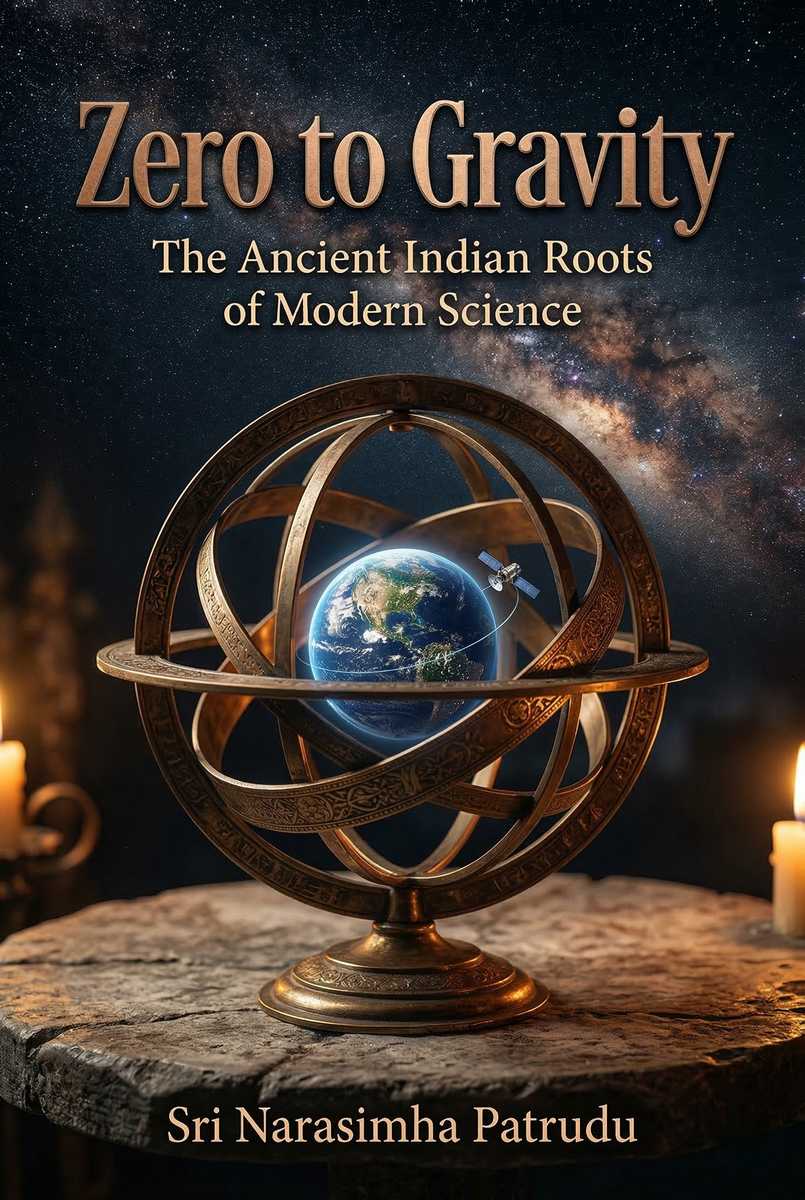
Astronomy in Ancient India
Mapping the cosmos through observation, mathematics, and philosophical insight—revealing one of the world’s earliest scientific traditions.
Astronomy in ancient India was not merely the study of stars—it was a foundational science that shaped timekeeping, calendars, rituals, and the understanding of the universe itself. Through careful observation and mathematical reasoning, ancient scholars developed systems to track planetary motion, measure time, and map the sky with remarkable precision.
What makes this tradition unique is its integration of observation, mathematics, and philosophy. The cosmos was not only observed but interpreted as a structured, interconnected system—where motion, time, and space followed identifiable patterns. This page explores that system through key themes, offering a structured gateway into one of the world’s oldest scientific traditions.
Nothing Found
COSMIC MODELS
At the highest level, ancient Indian astronomy sought to answer fundamental questions about the nature of reality: What holds the universe together? How do celestial bodies move? What is the scale of time and space?
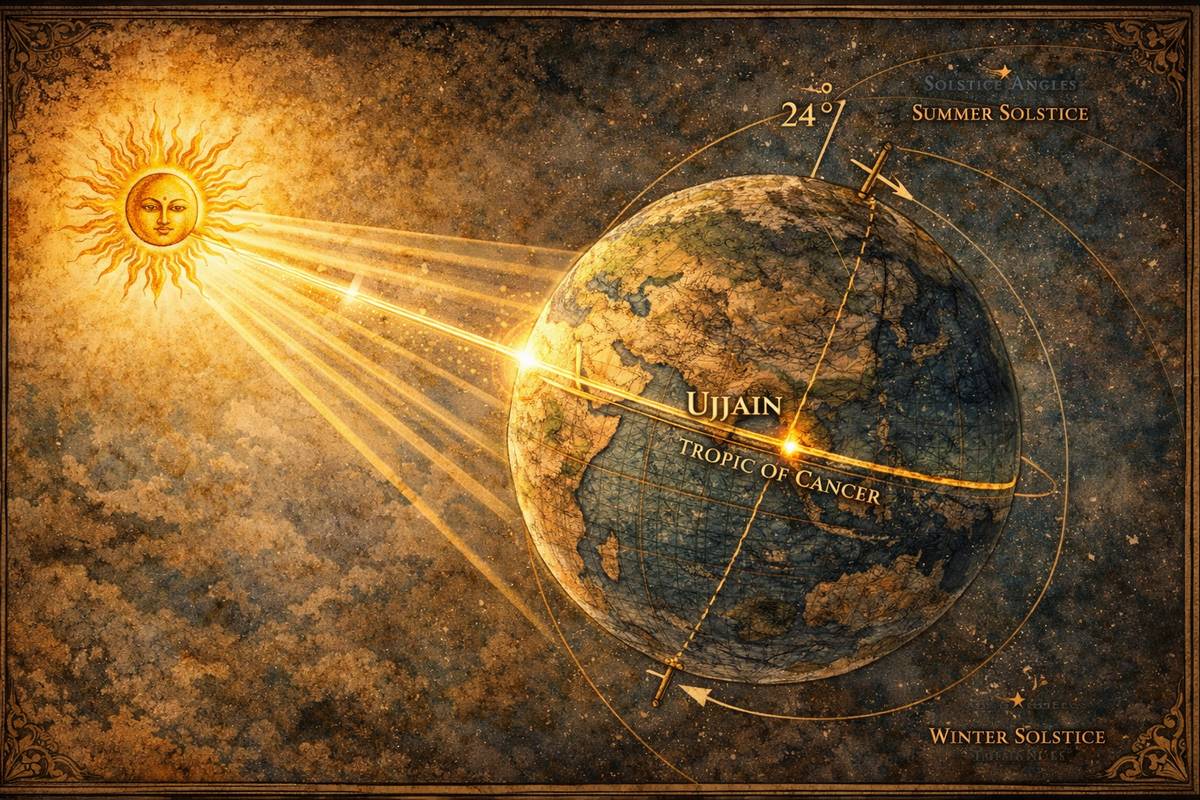
These inquiries led to models where the Sun plays a central role, and where forces such as attraction govern motion. Concepts of vast cosmic time cycles and relative experience of time reflect an attempt to understand the universe not just physically, but conceptually. These ideas form the philosophical and scientific foundation upon which more detailed astronomical systems were built.
PLANETARY MOTION
Beyond broad cosmic models, Indian astronomers focused on the precise mechanics of planetary motion. They observed patterns in how planets move, change speed, and occasionally appear to reverse direction in the sky.
To explain these phenomena, they developed mathematical frameworks that could predict planetary positions and behaviors. This shift from observation to calculation marks a critical step in the development of astronomy as a predictive science, where patterns in nature are translated into structured models.
OBSERVATIONAL ASTRONOMY
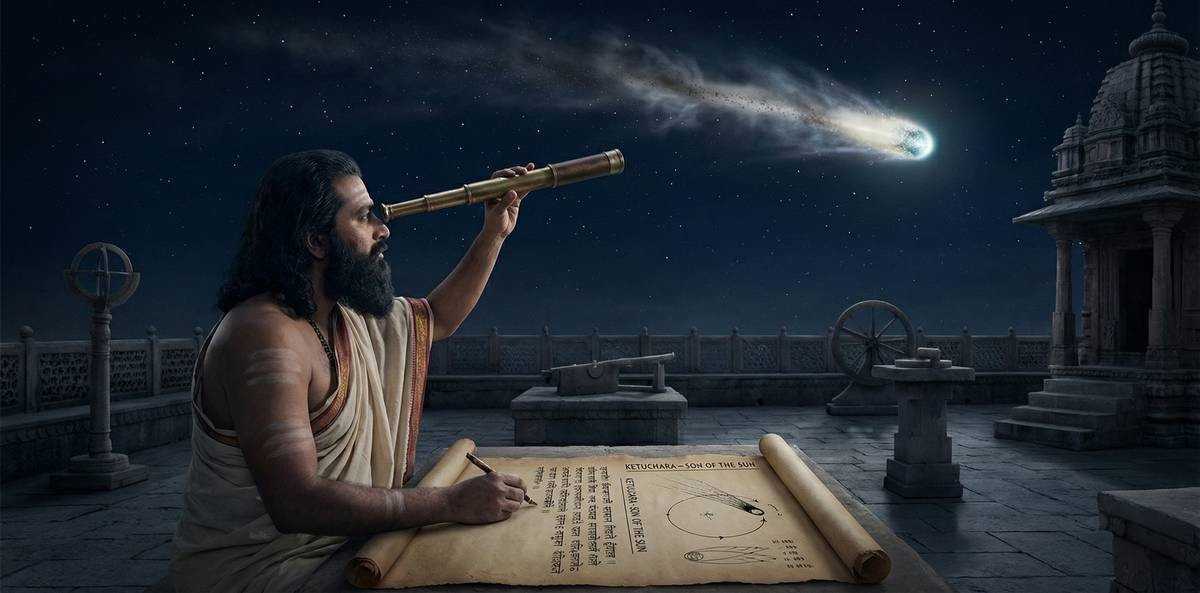
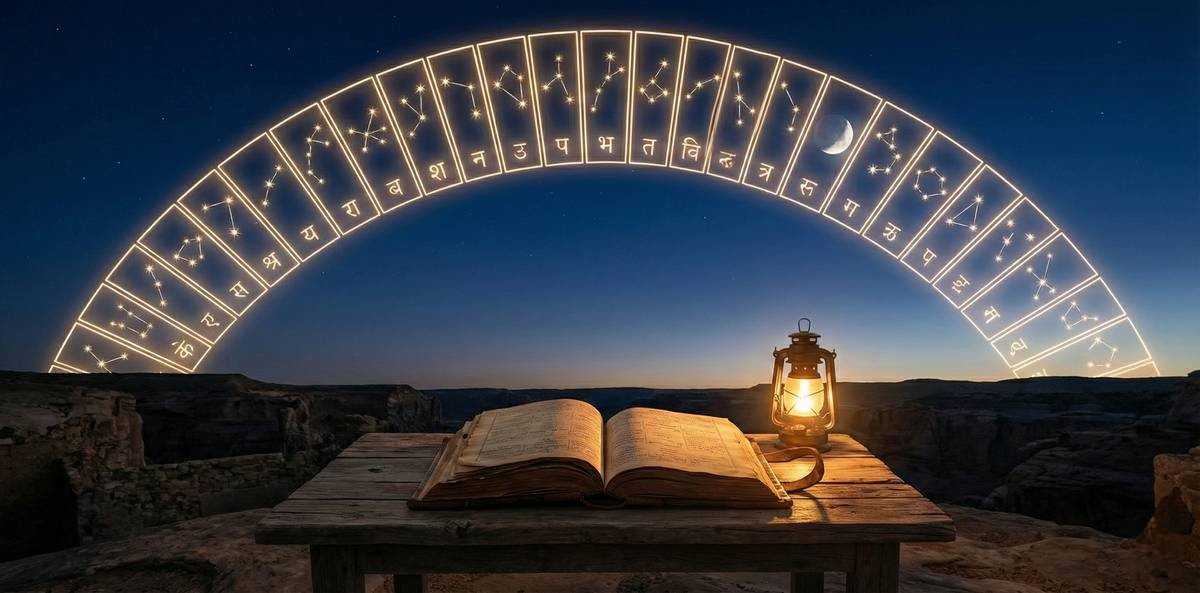
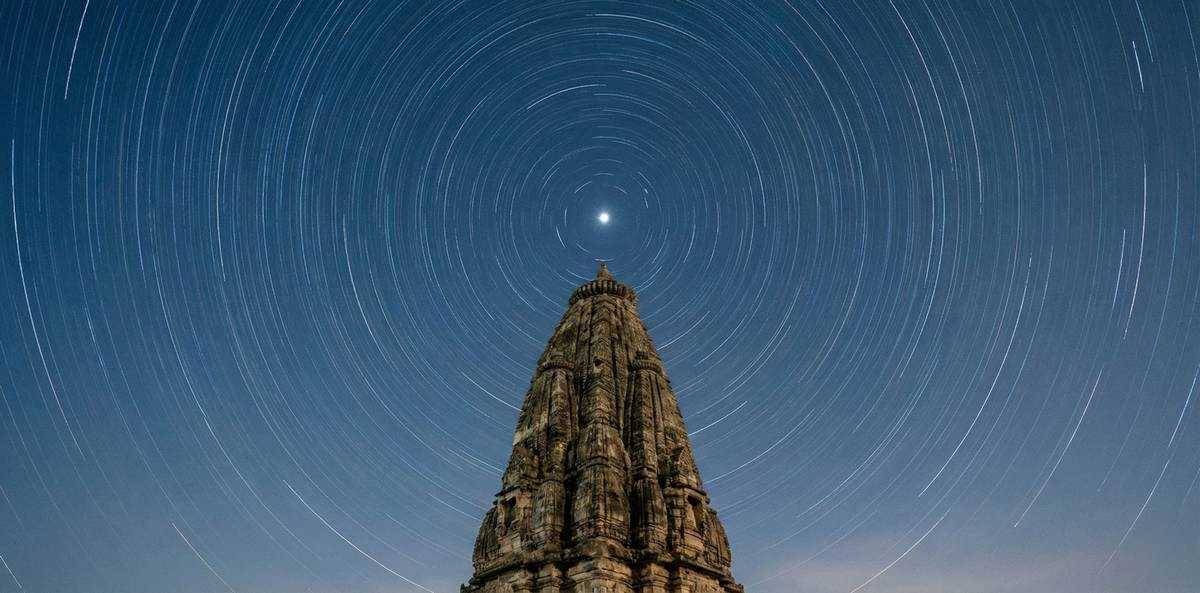
Much of this knowledge was grounded in direct observation of the night sky. Without telescopes or modern instruments, ancient observers tracked stars, comets, seasonal shifts, and lunar patterns over long periods.
This continuous engagement with the sky enabled them to identify recurring cycles and establish reliable markers for time and direction. The result was a deeply empirical tradition, where knowledge was built through careful observation and refined across generations.
TIME & CALENDARS
One of the most practical outcomes of astronomical study was the development of precise systems for measuring time. By observing the movements of the Sun, Moon, and stars, Indian scholars created calendars that aligned closely with natural cycles.
These systems were essential not only for scientific purposes but also for agriculture, navigation, and cultural practices. Accuracy in timekeeping ensured continuity, making astronomy a central pillar of daily life as well as intellectual inquiry.
MATHEMATICAL ASTRONOMY
At its most advanced level, ancient Indian astronomy combined observation with sophisticated mathematical techniques. Systems were developed to map positions in the sky, calculate distances, and predict celestial events with precision.
This integration of geometry, trigonometry, and measurement reflects a mature scientific approach—one that treats the universe as a system that can be understood, quantified, and modeled. It is here that astronomy transitions from observation to a fully developed analytical discipline.
Ancient Indian astronomy represents a complete knowledge system—one that moves from observation to theory, from measurement to meaning. It demonstrates that scientific inquiry has deep and diverse roots across civilizations.
By exploring these ideas, we gain not only historical insight but also a broader perspective on how humanity has sought to understand the universe. This is not merely a study of the past, but an expansion of how we think about science itself.