Vedic Age of Hindu Civilization
Where knowledge was not written—but remembered.
A civilization that preserved wisdom through sound, rhythm, and precision.
When we think of ancient knowledge, we often imagine manuscripts—texts written and preserved over time. But the Vedic Age challenges that assumption. Here, knowledge was not written down. It was heard, remembered, and transmitted across generations with extraordinary precision. And that raises an interesting question. What kind of system allows thousands of verses to survive—not on paper, but in memory—without distortion?
Not Just Texts, but a Living Tradition
The Vedas are often described as ancient scriptures. But that description is incomplete. They are not simply texts—they are part of a living tradition of knowledge transmission known as Shruti, meaning “that which is heard.” This distinction matters. Because Shruti is not about authorship. It is about preservation. The focus is not on who created the knowledge, but on how accurately it is transmitted. And over time, this led to the development of highly sophisticated methods of memorization—ensuring that sound, sequence, and meaning remained intact across centuries.
Memory as a Technology
One of the most remarkable aspects of the Vedic Age is its approach to memory. Knowledge was preserved through structured recitation techniques—patterns designed to eliminate error. Verses were repeated forward, backward, and in complex combinations. Pronunciation was standardized. Even the tonal quality of sound was maintained. You might notice something here. This is not casual memorization. It is a system—almost like an algorithm for preserving information. And in a world without written records, this system ensured continuity with astonishing accuracy.
Rig Veda
Composed of hymns and reflections, the Rig Veda explores cosmic ideas, natural forces, and the structure of existence.
Yajur Veda
Focused on procedures and rituals, it introduces structure and method into practice.
Sama Veda
Centered on sound and music, it emphasizes rhythm and vibration as carriers of knowledge.
Atharva Veda
Deals with practical aspects of life, including health, environment, and daily living.
A Civilization Focused on Inquiry
One of the striking features of the Vedic Age is what it prioritizes. There is little emphasis on political power or territorial expansion. Instead, the focus is on understanding—nature, existence, and the underlying principles that govern both. The central figures are not kings, but Rishis—observers and thinkers. This suggests something important. That the foundation of this civilization is not authority—but inquiry.
The Beginning of Structured Thought
While the Vedic texts are not scientific treatises in the modern sense, they contain early forms of structured thinking.
You begin to see:
– Awareness of numerical patterns
– Observation of celestial cycles
– Attention to linguistic precision
These are not fully developed systems yet. But they are seeds. And over time, these seeds evolve into the more formal disciplines we encounter in later periods—mathematics, astronomy, and medicine.
Thinking in Cycles, Not Lines
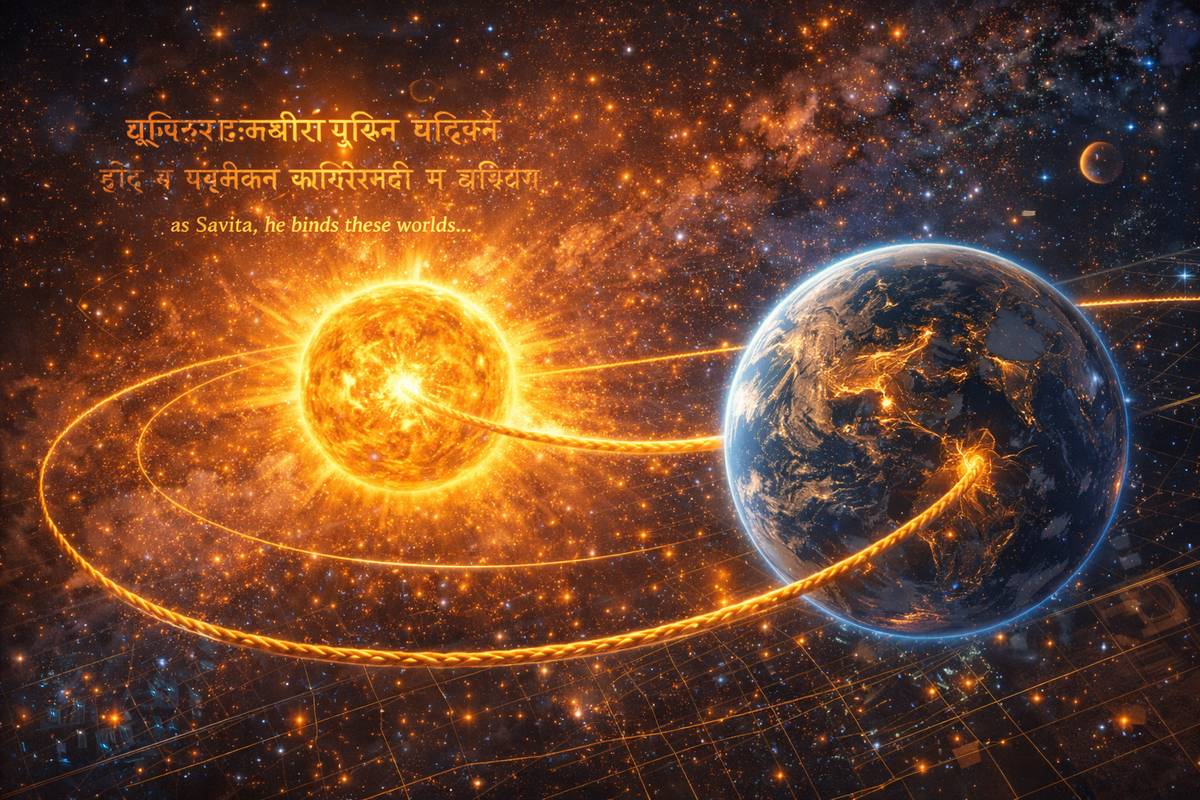
The Vedic worldview approaches time differently. Instead of a linear progression, it describes cycles—Yugas and larger cosmic durations that extend far beyond ordinary historical scales. Whether interpreted symbolically or cosmologically, this reflects a mindset that is comfortable with vast timeframes. And that perspective aligns closely with the broader discussion in the Ancient History section, where timelines are not confined to a narrow window, but expand into deep continuity.
The Precision of Sound and Language
Language during the Vedic Age is not just expressive—it is structured. Sound, rhythm, and sequence are treated with precision. Meter (Chandas) and phonetics are carefully defined, laying the groundwork for later developments in grammar. This attention to structure eventually leads to highly formal systems of linguistic analysis. But even at this stage, you can see the foundation—language as a tool of knowledge, not just communication.
From Foundation to System
The Vedic Age does not end abruptly. Its ideas flow into later layers of thought—Brahmanas, Aranyakas, Upanishads, and eventually the structured systems of the Classical Period. This continuity is important. Because it shows that what emerges later is not disconnected. It is built upon an existing foundation. Understanding the Vedic Age, therefore, is not just about the past. It is about understanding the roots of everything that follows.